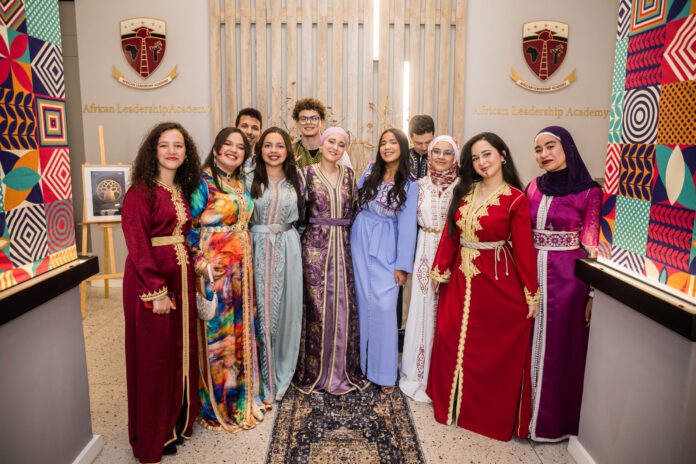
From 18 to 22 March 2026, African Leadership Academy hosted the 13th annual ALA Model African Union Conference at Misty Hills Conference Centre in Johannesburg, South Africa. Under the theme
“Actualizing the African Renaissance through Strategic Unity in a Shifting Global Order,” ALAMAU 2026 brought together young people from across the continent to step into the roles of policymakers, diplomats, negotiators, and problem-solvers.
This year’s conference welcomed 162 delegates, representing 32 nationalities and 12 schools across 8 countries. Over four days, delegates submitted more than 150 position papers, participated in 9
committee sessions, completed 12 hours of live debate, took part in 6 expert workshops, and heard from 5 speakers and panelists.
ALAMAU is built on a simple idea: young people should not only learn about governance, they should practice it. Through simulations of African Union structures, delegates were challenged to understand national interests, build coalitions, negotiate across difference, and propose practical policy responses to complex issues. The result was a conference that was rigorous, collaborative, and rooted in the belief that Africa’s future will be shaped by leaders who know how to work across borders and institutions.
A Conference Grounded in Strategic Unity
The 2026 theme invited delegates to consider what an African Renaissance requires in a moment of global change. Across committees, students debated issues related to digital sovereignty, education, labor, health, debt, climate resilience, investment, and continental self-reliance.
The committee resolutions reflected the ambition and seriousness of the delegates’ work. In the Economic, Social and Cultural Council, delegates proposed strategies to expand ICT literacy and strengthen youth digital rights. In African Union Development Agency – Partnership for Africa’s
Development, they explored continental investment standards and value retention frameworks. The Specialized Technical Committee on Education, Science and Technology called for intra-African research exchanges, regional teacher certification, and scholarship models that support a “Brain Gain” movement. Other committees addressed informal labor formalization, renewable energy development, green and digital economies, and Africa’s vulnerability within the global debt system.
These debates pushed delegates to think not only about what Africa’s future could look like, but about the institutional choices, trade-offs, and coordination required to build it.
Learning from Leaders Across the Continent
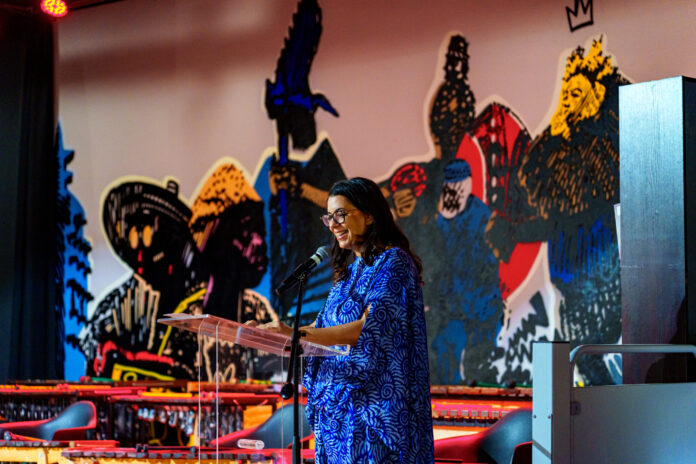
The conference opened with a keynote address from Mr. Nelson Muffuh, UN Resident Coordinator for South Africa, who challenged delegates to see Africa’s youth population as one of the continent’s greatest strategic assets. His remarks emphasized that young people’s leadership must begin now through informed engagement with the issues shaping their societies, and that Africa’s power in a shifting global order will depend on coordinated continental positioning.
The Diplomatic Roundtable brought delegates into direct conversation with leaders from parliament, civil society, AUDA-NEPAD, and the Pan-African Parliament. Panelists included Hon. Nobunto Hlazo-Webster, Ms. Jessica Annor, Mr. Moeketsi Koahela, and Ms. Lindokuhle Dlamini. Their reflections challenged delegates to move beyond symbolic youth inclusion and toward structural participation, gender-conscious policy design, stronger domestic agendas, digital civic engagement, and coordinated continental health systems.
For many delegates, these sessions helped connect committee debates to the realities of governance. They heard directly from practitioners working within the systems they were simulating and were invited to think about leadership not as a future title, but as a present responsibility.
Workshops Beyond the Committee Room
While diplomatic simulation remained the core of ALAMAU, the 2026 conference also offered practical workshops designed to equip delegates with tools they could apply beyond the conference.
The workshops covered entrepreneurship, environmental stewardship, financial wellness, university guidance, careers in the arts, and leadership development. Delegates explored how to identify unmet needs in their communities, practice frugal innovation, understand the tension between industrialization and decarbonization, build healthy financial habits, make more intentional university choices, and view the creative economy as a serious pathway for meaningful and sustainable work.
These sessions gave delegates space to reflect on who they are becoming, what they want to build, and how they can begin applying leadership in their schools, communities, and future careers.
A Solutions-Oriented Crisis Committee
One of the most rigorous academic components of ALAMAU 2026 was the Crisis Committee, developed in partnership with the World Gold Council. The session explored “Addressing Illicit Gold Financing and Extremism in the Sahel,” a topic that sits at the intersection of security, livelihoods, economic governance, and regional stability.
The Crisis Committee was designed as a fast-paced simulation of real-time decision-making. Unlike traditional committees, delegates could not rely on prepared speeches or pre-written positions. Twenty-four selected delegates, drawn from the strongest performers across the conference and the Press Corps, received new country allocations, a new study guide, and a limited preparation window before entering the simulation.
The session asked delegates to work through the difficult policy questions that arise when governments and regional institutions seek to strengthen oversight, protect livelihoods, and build trust with communities. Delegates considered the role of artisanal and small-scale gold mining as a livelihood across the Sahel, the risks created when informal or illicit flows are exploited by armed groups, and the challenges of building formal systems in contexts where trust and state capacity may be limited.
The committee was framed around practical, forward-looking solutions. With input and reference materials from the World Gold Council, including resources related to artisanal and small-scale gold mining, delegates debated recommendations related to traceability, transparency, formalization, livelihood protection, institutional capacity, and responsible governance.
The session challenged delegates to balance security concerns with economic realities, consider the unintended consequences of policy design, and work toward proposals that recognized both the urgency of the issue and the importance of trust-based, inclusive approaches. Rather than reducing the topic to a single actor or cause, the simulation helped students understand the complexity of supply chains, governance gaps, community livelihoods, and regional security.
With Gratitude
ALA is deeply grateful to all delegates, advisors, facilitators, speakers, panelists, Secretariat members, and staff who made ALAMAU 2026 possible.
We extend special thanks to the World Gold Council, the headline sponsor of ALAMAU 2026. Their support helped make the conference accessible to delegates who may not otherwise have been able to attend, underwrote key elements of the conference experience, and strengthened the academic depth of the Crisis Committee through thoughtful input, reference materials, and a solutions-oriented approach to a complex policy issue. Their partnership helped ensure that ALAMAU 2026 was not only a simulation of leadership, but a meaningful exercise in informed and responsible problem-solving. The broader ALA–World Gold Council partnership embeds mining governance in the curriculum, supports scholarships, strengthens youth policy engagement, and builds career pathways into the sector.