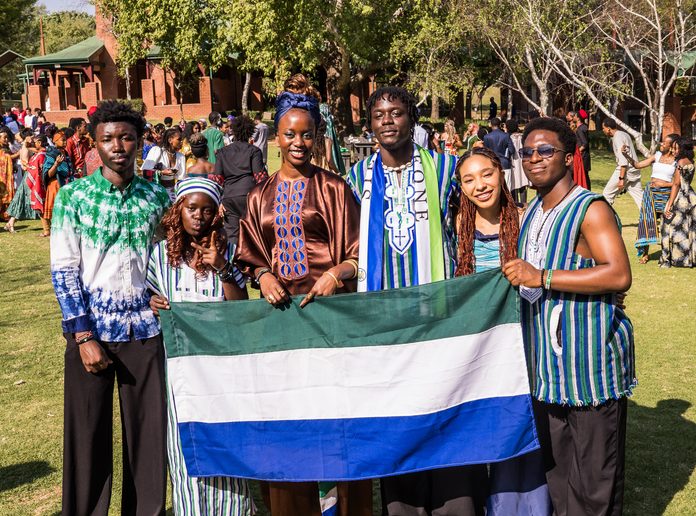
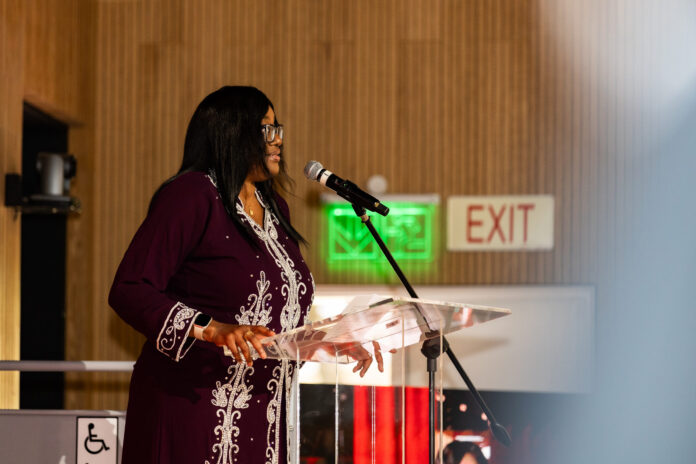
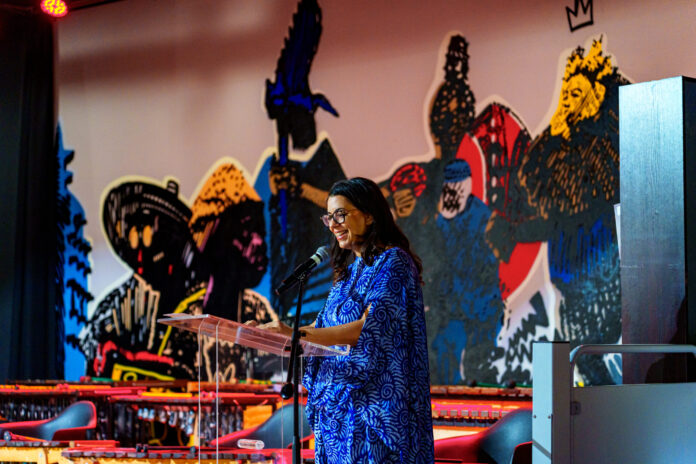
In August 2026, African Leadership Academy welcomed its 19th class of young leaders, drawn from 32 countries across the continent. They arrived with work already underway: campaigns in their schools, conversations in their neighborhoods, prototypes built with whatever tools they could find. What they share is a habit of noticing a problem close to home and refusing to leave it alone.
Meet a few of the members of the Class of 2026.
Netanya Lira, Ethiopia
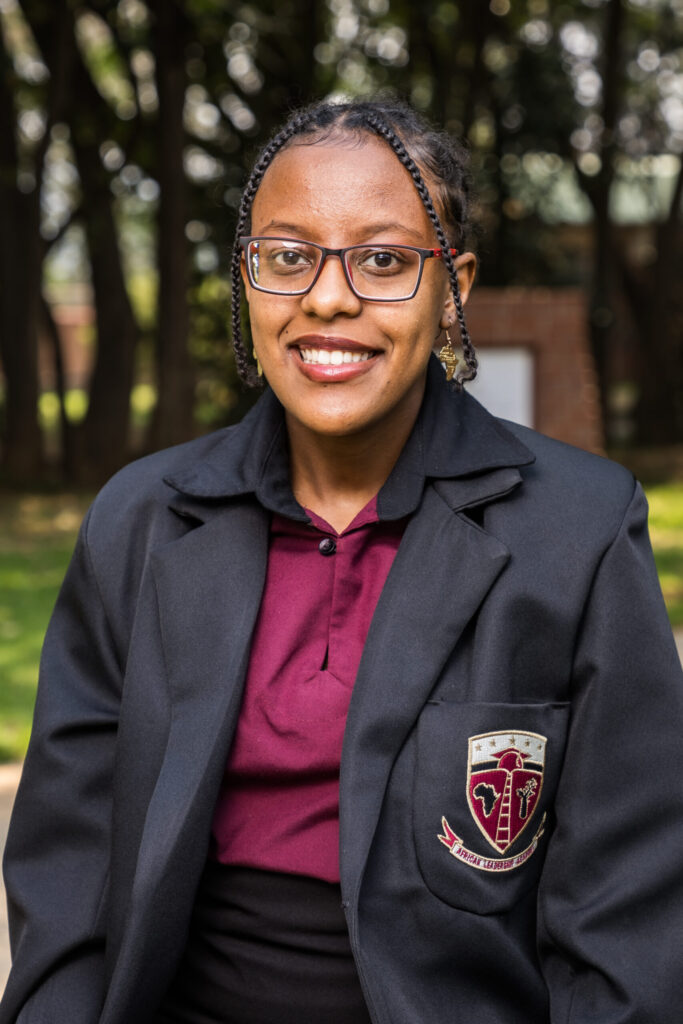
Netanya’s work began with a problem she lived through. In seventh grade, she faced the sudden switch many Ethiopian students know well: moving from learning in Amharic to studying nearly every subject in English. She sat in class copying notes she could not fully understand, and she noticed she was not alone. Classmates were struggling with the same shift, and many were starting to doubt their own abilities. It raised a question that has shaped her leadership ever since: how can students succeed if they are never given the tools to understand their lessons?
She started with herself, learning English through online resources and daily conversations with a volunteer teacher who was a native speaker. As her skills grew, so did her awareness that most students had no such support. In 2023, she founded Education4all to help underserved students in Addis Ababa build their English, and to connect educators across Africa so they can share what works.
Education4all’s first major program was a one-month summer camp run with a local school and an NGO. Netanya worked with 15 volunteer teachers to design a curriculum that moved away from “chalk and talk” toward games, interactive lessons, and group work. Students who arrived struggling to introduce themselves in English left writing short paragraphs and holding simple conversations.
The initiative has since grown into online programs and collaborative learning spaces, reaching more than 230 students with curricula adapted to their needs and context. On the Education4all Africa Podcast, Netanya talks with educators in under-resourced schools across the continent about how they adapt their teaching and make learning engaging with the resources they have. She also serves as vice president of her school’s Speech and Debate Club, where she leads student organizers, hosts workshops, and coordinates competitions across multiple schools.
Her view of leadership is practical. “Leadership is not about everything going according to plan,” she says, “but about being able to alter things to achieve the end goal.”
Amina Ichaoui, Morocco

Amina figured the most persuasive voice for a teenager is another teenager. At her school, she grew uneasy watching vaping become normal among her classmates. What troubled her was not only the health risk but how easily addiction got waved off as harmless, stylish, or simply part of fitting in. Students heard the warnings from adults and tuned them out. If anything was going to change, she decided, it would have to come from inside her own generation.
She started by trying to understand the problem rather than assume it. With a group of peers, she designed an anonymous survey to learn why students were vaping and how far it had spread. The answers kept circling back to the same things: peer pressure, social media, and a thin understanding of how addiction works. From there, she helped build a youth-led awareness campaign that relied on dialogue instead of judgment. Her interactive workshops mixed discussion, activities, and clear science, and by moving between Arabic and French she made sure students from different backgrounds could take part. Over time, attitudes shifted. Students grew more aware of the risks, less inclined to treat vaping as something to admire, and more willing to hold one another accountable.
Amina brings the same instincts to engineering. When she learned about Morocco’s National Engineering Science Olympiads, themed “Engineering at the Service of Energy Challenges,” her school had not competed in years. She and two teammates convinced the administration to commit, then spent months researching renewable energy. Their project, EcoWin, imagines a school that powers its own lights with solar panels and piezoelectric tiles that generate electricity from footsteps, while collecting and treating rainwater and greywater to irrigate its gardens, with Arduino sensors that water only when the soil is dry. The team advanced through regional rounds to the national finals and won the silver medal in 2025, as the youngest team in the competition and the only one from a science track rather than an engineering track.
She followed that with SmarTourism, built with two teammates for the Future Science Challenge, a UAE competition for gifted youth across the Arab world. Designed around the pressures facing Marrakech, the project combines artificial intelligence and connected devices to ease overcrowding at monuments, reduce traffic congestion, and protect visitors from unfair pricing, through an app with timed booking slots, personalized routes, and certified vendors, plus a smart lantern and traffic sign that monitor conditions on the ground. Out of 600 teams, SmarTourism reached the top 30 and won the Best Design Award, the only Moroccan team honored in its category.
Outside competitions, Amina is president of the Hands in Hands club in Marrakech, where she organized Iftar pack distributions for more than 100 beneficiaries, and she has led nutrition workshops for more than 100 primary school students. She was twice selected as one of 100 students nationwide for the Feynman Moroccan Adventure physics camp. Whether the problem is public health or sustainable design, she works from the same starting point: understand what people actually need, then bring the community into the solution.
Eddie Francis, Kenya
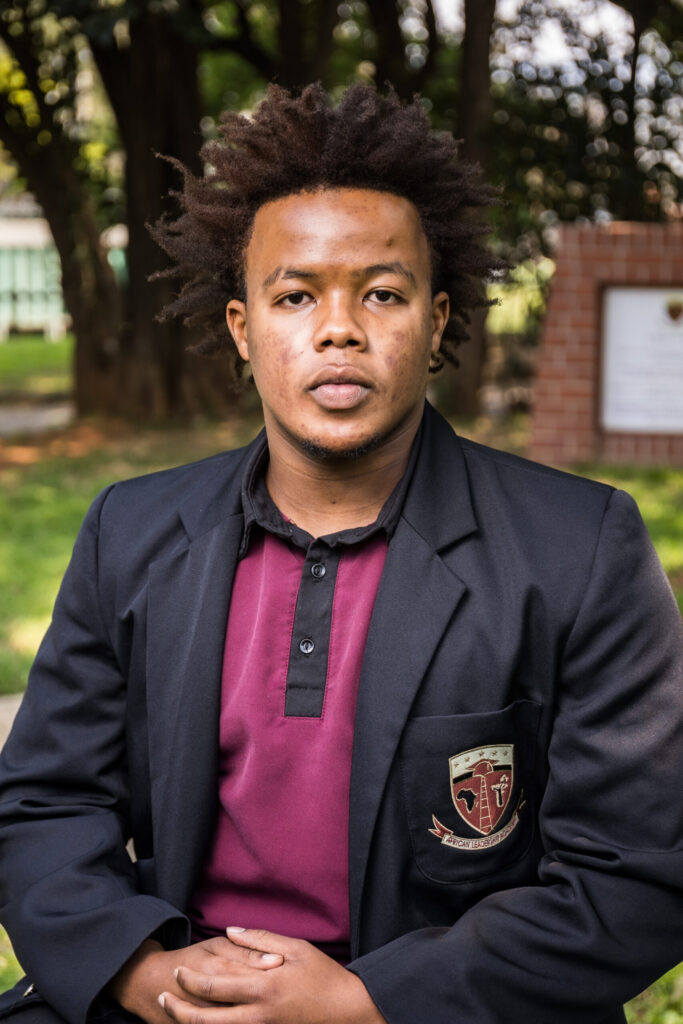
Eddie works where two problems meet: plastic waste and the lack of affordable housing. In Kenya, rapid urban growth has pushed many low-income families into informal settlements, where homes are often unsafe and unstable. At the same time, plastic keeps piling up in the environment. Eddie started with a simple question: could one problem help solve the other?
With his team, he began turning plastic waste into building material. Working with basic tools and their own money, they produced their first prototypes, bricks made by melting and reshaping plastic. Without advanced equipment, progress came through trial and error, but the early bricks proved the idea could work. The project gained traction at the Nova Talks Tournament, where the team pitched to investors, including representatives from UNHCR and Mastercard. Competing against more than a thousand students, they won and secured potential funding to scale, on the condition that they first build and test a small structure. Since then, Eddie and his team have focused on making the bricks fit for real homes, experimenting with materials such as nanoclay to improve heat resistance.
One lesson came early. “Having an idea is not enough,” Eddie says. “Getting it right requires input from people who understand the field better, something I wish I had sought out sooner.”
That lesson shapes his second venture. Eddie founded Frankly Speaking, a platform that helps young people move from classroom knowledge to real-world leadership. In March 2026, it hosted the Youth Entrepreneurship and Leadership Summit at HQ House in Tatu City, bringing together 135 students, founders, investors, mentors, and members of the media. Before the summit, participating founders went through a month of training on pitching, business models, market positioning, and using emerging technologies such as AI. Of the 13 startups in the program, 10 were incubated, four pitched on stage, and three received funding, while more than 2,000 people watched the livestream.
Eddie measures progress by what has actually been built: a concept that became a working prototype, and an idea others now take seriously. His direction is clear. Build something that works, then build it at scale.
Looking Ahead
These are just a few of the students who make up ALA’s Class of 2026. Each began with a problem they could see from where they stood: a risky habit spreading quietly through a school, lessons taught in a language students were still learning, plastic piling up beside homes that cannot keep out the rain. Each decided it was theirs to work on. Over the next two years, they will sharpen those instincts alongside peers from across the continent.
Applications are now open for the Class of 2027. If you are ready to lead, to challenge yourself, and to shape Africa’s future, we invite you to apply.