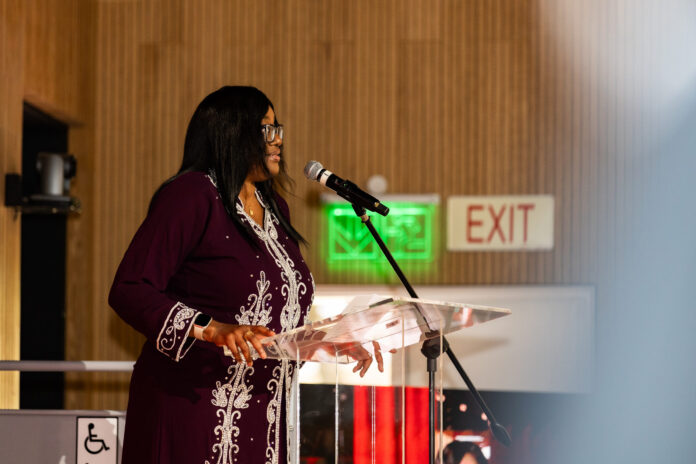
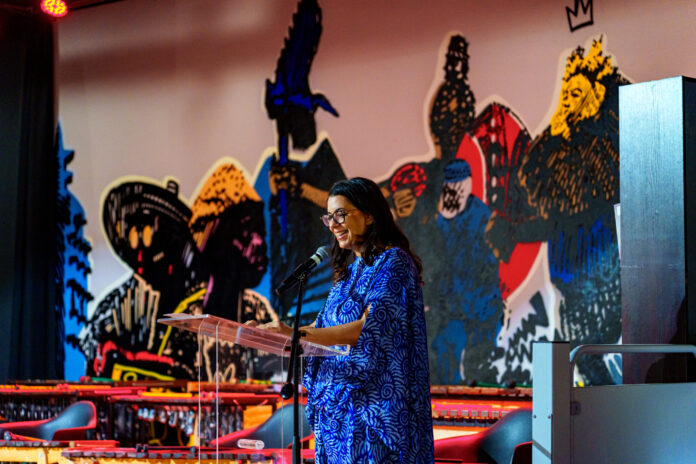
When student speaker Njoki Njoroge ’24 (Kenya) walked onto the graduation stage, she carried a box.
Inside were small, ordinary objects: an empty packet of Smarties, sticky notes, bracelets, letters, and a paper bow tie. At first glance, they may have seemed simple. But as Njoki began to speak, it became clear that each object was attached to a person, a memory, and a moment that had shaped her two years at African Leadership Academy.
For Njoki, these people were the whole point.
She spoke honestly about who she was when she first arrived at ALA. Like many students, she came in bright-eyed and ready, fully convinced that she was on her way to becoming extraordinary. ALA’s mission had resonated with her, and she believed she understood what leadership and success would require.
But ALA was not easy. It challenged her in ways she had not expected. It stretched her thinking, tested her resilience, and left her with lessons, memories, and artifacts.
Her first artifact pointed to Khaya, her student enterprise, which began with a simple confession box placed in the foyer. The box invited students to share what it felt like to represent their nationality within the ALA community. What began as a campaign became one of the most intellectually formative experiences of Njoki’s time at ALA. It pushed her to think more critically, communicate more clearly, and extend herself beyond what she believed her capacity to be.
Central to that growth was the cohort around her. She named them with warmth and precision: Resego, whose enthusiasm for finance was contagious enough to make even the disinterested lean in; Mashour, who spoke about the African Research Program with such conviction that he made others want to begin researching immediately; Sali, making creativity look effortless at the board in the foyer; and Marwa, building entire worlds out of words.
Njoki also spoke about grief. Around a year earlier, she had lost her grandmother. ALA was already demanding, and then it became harder still. She described the weight of carrying that loss within an institution that asks so much of its students: the all-nighters, the 3am fire alarms, the resitting of leaked exam papers, and the constant practice of saying goodbye.
What carried her through was an image shared by a friend: a duck gliding across a lake, graceful and composed on the surface, while its feet moved furiously beneath the water.
“ALA is full of ducks,” she said. “Brilliant ducks. Ambitious ducks. Stressed ducks. Exhausted ducks. But most of all, compassionate ducks.”
By the time Njoki reached her final artifact, a paper bow tie from Battle of the Mask, her central message had already taken shape. The objects in the box were never really the point. They were evidence of a community so specific, so deeply lived, that it resists easy explanation. She recalled trying to describe the ALA experience to her mother and realizing, partway through, that she could not fully explain it. Some things only make sense to those who were present for them.
She closed by returning to the girl who had arrived two years earlier, certain that leadership meant becoming extraordinary.
“The Njoki leaving ALA understands that she is not big enough or important enough to create change on the African continent alone. She is not extraordinary in isolation, but she is grateful she had the chance to be extraordinary through community.”
She left the audience with a Swahili proverb: Mtu ni watu. A person is people.
And then, a final challenge: do not only search for people worthy of your love. Search for people you would willingly grieve, because the experience of knowing them was worth it.
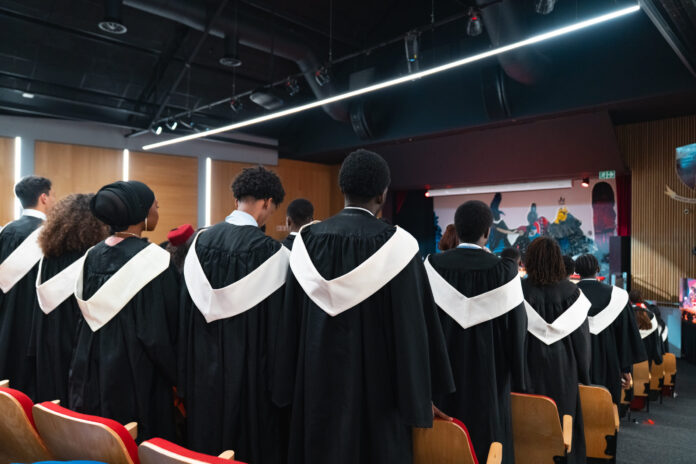
As the Class of 2024 steps forward, they carry that lesson with them. Not to be extraordinary alone, but to find the people who make it possible.