Each year, our annual report offers a chance to step back and see the full picture: the students on our campus, the alumni building careers and institutions around the world, and the partners who make this work possible. This year’s report brings together stories that capture what makes this community special and the impact we are having together.
Alumni making headlines
Two of these stories will likely be familiar, as we have shared them widely this year.
In September, Mary-Brenda Akoda ’14 (Nigeria) became the first woman and the youngest person to win The Nigeria Prize for Science and Innovation. She was recognized for GenScan AI, software that reduces a 20-minute MRI scan to two minutes on machines hospitals already own.
Earlier in the year, Cornelia Kruah-Togba ’08 (Liberia), a member of ALA’s first graduating class, was appointed Liberia’s Minister of Youth and Sports. At 35, she is the youngest person ever to hold the post.
More stories from the report
Najmeddine “Naaj” Harrabi ’14 (Tunisia) grew up in a mountain village without electricity and watched his first television show on a black-and-white set powered by a car battery. Today he is a filmmaker and comedian in Los Angeles and the founder of ShepherdBoy Entertainment, which develops Indigenous talent from Africa and the Middle East.
Nicole Babirye ’26 (Uganda) surveyed more than 100 classmates and co-created a documentary that persuaded her former school’s board to allow girls to wear their natural hair. Her campaign has since reached more than 100,000 people online.
Eric Wambugu ’25 (Kenya) is working to earn African food traditions the same respect given to Western cuisine. As a Bezos Scholar, he has carried that mission from the Aspen Ideas Festival to an international symposium on food and culture in Bogotá, Colombia.
Favour Bamidele-Tugbobo ’25 (Nigeria) is dedicating her ALA Thesis to the mental health of mining workers. While companies have long prioritized physical safety, she is examining the part of worker wellbeing the industry has overlooked.
Vuyisile Magagula ’21 (Eswatini) spent five months in Botswana designing and teaching a digital skills curriculum for 45 primary school students. Their scores on the mock Primary School Leaving Examination rose by 30%.
Also in this year’s report
- Louay Cherif ’26 (Tunisia), ALA’s first blind student, who helped open Tunisia’s computer science track to blind students
- The inaugural African Leadership Festival, which brought 400 delegates from 32 countries to our campus
- The AI for Africa bootcamp with MBZUAI, where high school students built tools to address problems they knew firsthand
- A record year of alumni giving, with 233 alumni donating to ALA, up from 16 the year before
About the artwork
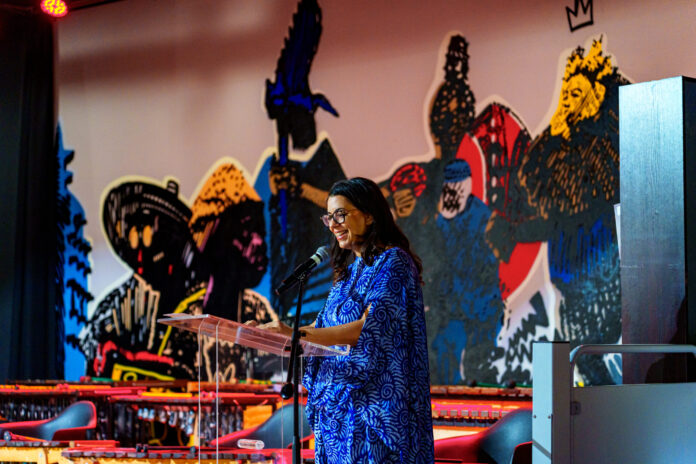
The artwork throughout this year’s report comes from our own campus. It is drawn from Ejo, the mural the Class of 2024 graduated in front of, created by Jayden Nkindi Uwishaka ’24 (Rwanda) with the support of street and graffiti artist George “Mars” Kalapov.
In Kinyarwanda, ejo means both “yesterday” and “tomorrow.” Jayden built the mural around that idea: the future cannot be separated from the past. Drawing on Sankofa, the Akan philosophy of looking back in order to move forward, he created the piece to honor the stories and communities that shape each of us. It was a fitting backdrop for a graduating class, and it is a fitting frame for a report about where this community has been and where it is going.
In his letter, CEO Hatim Eltayeb describes the people in these pages as entrepreneurs who see abundance where others see poverty, public servants who see order where others see chaos, and scientists who see solutions where others see scarcity.
We invite you to spend time with their stories, and we thank you for being part of the community that makes them possible.