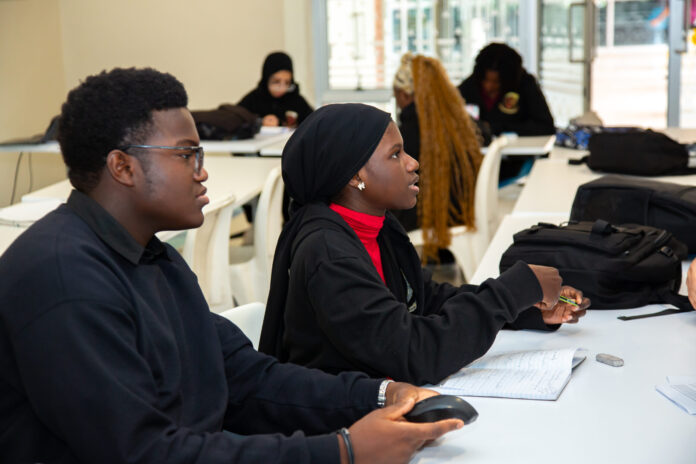
What happens when a young person is given the tools, support, and confidence to think beyond themselves? You begin to see the future take shape in practical and lasting ways.
Meet Muram, Daboye, and Ashley, students at ALA. Through their experiences at ALA, they are learning not only what they want to pursue, but how to approach complex problems with responsibility, context, and purpose. Their stories reflect a simple truth. Africa’s transformation is not an abstract ambition. It is being built, deliberately and thoughtfully, by young people who are being prepared to lead.
For Muram El Zubeir, a Year 1 student from Sudan, that preparation is deeply personal. Her interest in healthcare goes beyond infrastructure or systems. She speaks about dignity. About access. About communities that have been overlooked for far too long. What drives her is the belief that better healthcare can restore trust and humanity where it has been eroded, and that lasting solutions must be designed with the people they serve in mind.
Daboye Soberekon, a Year 2 student from Nigeria, is focused on a different kind of challenge. He points to Africa’s reliance on external technologies and the long-term risks that come with it. In a world where digital tools shape everything from governance to identity, Daboye believes Africa must play a stronger role in shaping the research, policies, and systems that guide its own technological future, rather than simply adopting what is built elsewhere.
From Tanzania, Year 2 student Ashley Nalingigwa Andetta brings the conversation to industrialization and production. She begins with a straightforward observation. Africa is rich in natural resources. Her question is why that abundance has not consistently translated into shared prosperity. Through STEM and manufacturing, she hopes to help build systems that allow communities to benefit more directly and sustainably from what already exists around them.
What stands out across their stories is not only what they want to change, but how they describe their own growth. Ashley speaks about moving from big aspirations to learning how to carry responsibility with intention. Muram reflects on gaining the confidence to design solutions that can scale beyond a single place or moment. For Daboye, being immersed in emerging technologies and constant debate has sharpened his thinking about their long-term impact on African societies. At ALA, he says, possibility has turned into conviction.
Through programs such as Model African Union and African Studies, ALA invests in helping students ground their ambitions in history, ethics, and lived reality. The result is a generation of young leaders who understand the complexity of Africa’s challenges and are preparing themselves to lead with clarity, discipline, and purpose.
This is what investing in Africa’s future leaders looks like.