At ALA, students are encouraged to engage deeply with the challenges facing the continent and to design practical solutions in response. This spirit sits at the heart of the Entrepreneurial Leadership (EL) program, where students learn to approach problems with curiosity, creativity, and a strong sense of responsibility.
In Year 1, students explore frameworks that challenge assumptions and expand how they think about leadership, entrepreneurship, and impact. Alongside leadership coaching, they build skills in collaboration, research, and critical thinking, while reflecting on their own values and growth as leaders.
The year culminates in the Original Idea for Development (OID) Incubator, where students work in teams over six weeks to design solutions to pan-African grand challenges. Using a human-centered design approach, teams investigate real problems, test ideas, and refine solutions aligned with their passions and lived experiences.
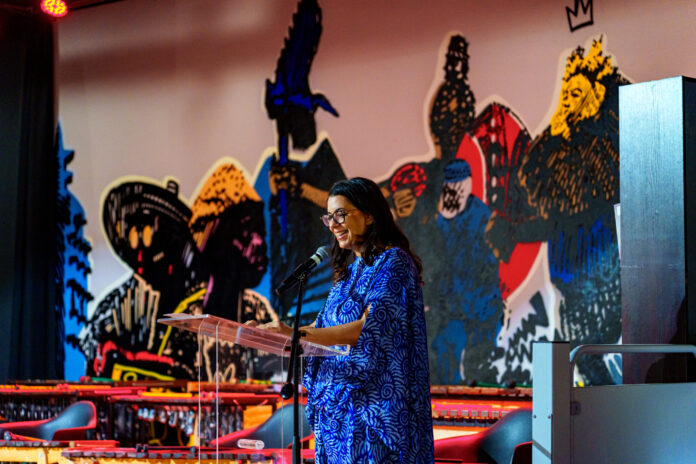
This journey concludes with E-Fest, where the top three ideas, selected through a rigorous process, are presented to the ALA community and a panel of external judges. One team is then selected as the winner. E-Fest is ALA’s flagship celebration of entrepreneurial leadership, showcasing innovative, homegrown solutions developed by both Year 1 and Year 2 students.
2026 E-Fest Theme: Ngoma Ya Mawazo (Rhythm of Ideas)
This year’s theme celebrates how creativity, culture, and collaboration bring ideas to life. Just as ngoma in many African traditions represents collective rhythm and shared energy, ideas grow stronger when people come together to challenge, refine, and build on them.
The top three teams presented their ideas to the ALA community and a panel of external judges, who ultimately selected the winning team. The finalists were Altas ya Desturi, Dabbaba, and DIMA.
E-Fest 2026: Top Three Teams
Altas ya Desturi
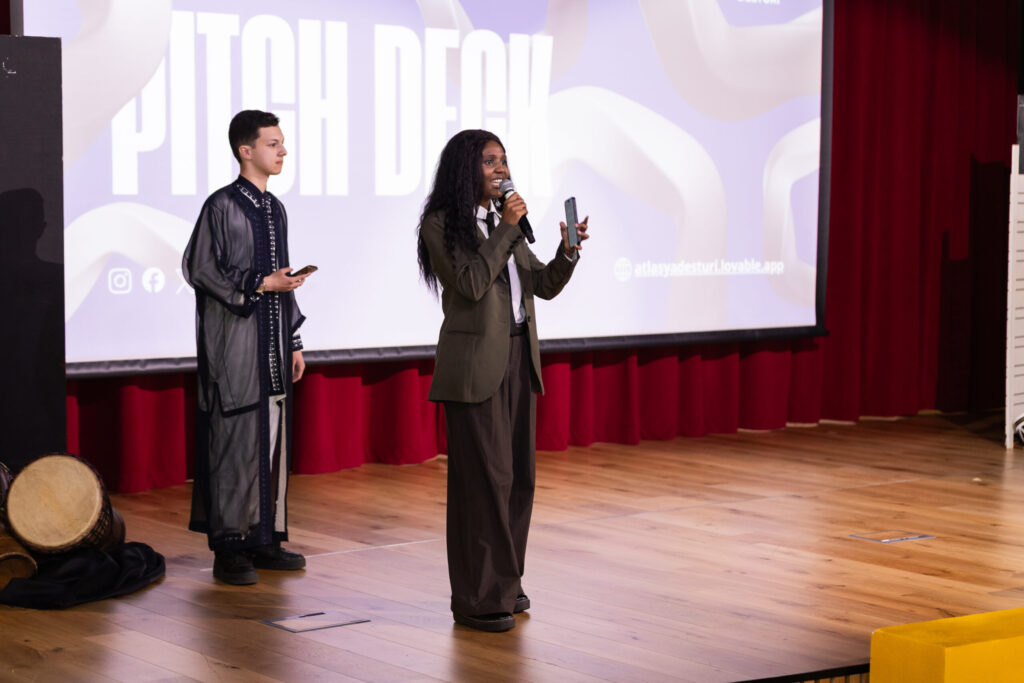
Altas ya Desturi proposes an Afrocentric AI platform that helps young Africans reconnect with their cultural heritage. The team identified a growing disconnect between urban youth and traditional African knowledge, particularly in rapidly modernizing cities.
Their solution, Atlas ya Desturi, combines an interactive digital map of Africa with a chatbot trained on verified African historical, linguistic, and cultural data. The platform allows users to explore traditions, oral histories, philosophies, and cultural practices from across the continent. By making this knowledge accessible through technology, the team aims to strengthen cultural identity while preserving indigenous knowledge systems.
Dabbaba
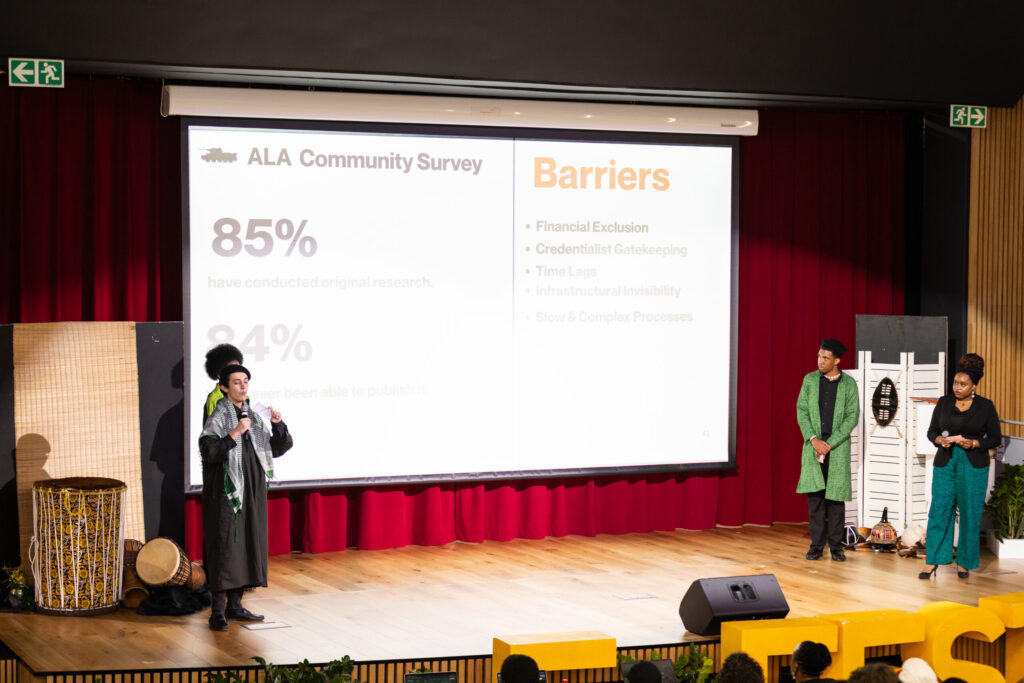
Dabbaba focuses on creating a platform where young African scholars can share their research with the world. The team identified a major challenge: many young researchers across the continent struggle to publish their work due to high journal fees, strict academic barriers, and limited access to credible publishing platforms.
Dabbaba proposes Africa’s first free, peer-reviewed academic journal dedicated to young African researchers aged 16–25. The platform offers credible publishing opportunities, rigorous peer review, and pathways to academic recognition through DOI accreditation. By removing barriers to publication, the team aims to amplify youth research and ensure their ideas contribute to policy discussions and global knowledge.
DIMA
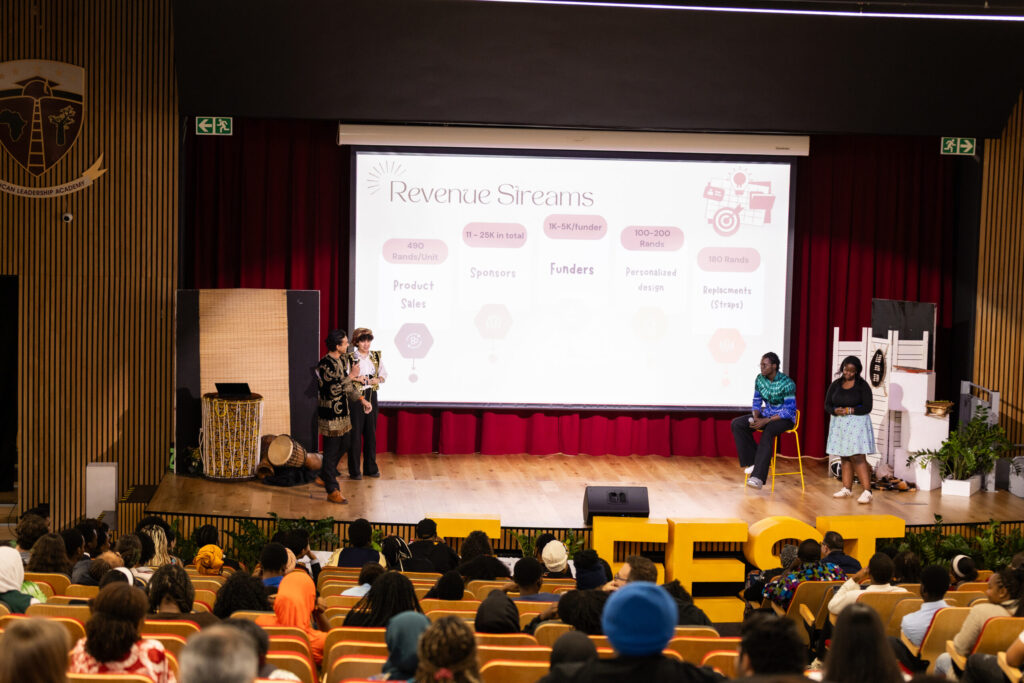
DIMA addresses a maternal health challenge experienced by many women across Africa: pregnancy-related back and pelvic pain. Many pregnant women lack access to affordable, reliable support systems that can relieve discomfort and prevent long-term complications.
The team’s solution is an affordable maternity support belt, designed with breathable fabric and adjustable elastic support to reduce strain on the lower back and pelvis. The product would be distributed through maternity clinics, community health workers, and local pharmacies to ensure accessibility in low-resource communities. By combining physical support with community-based health education, DIMA aims to improve maternal comfort, mobility, and overall well-being during pregnancy.
Following the presentations, the judges named Altas ya Desturi the winner of E-Fest 2026.
Congratulations to Altas ya Desturi for their outstanding work, and to Dabbaba and DIMA for their thoughtful and impactful ideas. E-Fest would not have been possible without the guidance and support of the Entrepreneurial Leadership faculty, who worked closely with students throughout the OID incubator journey.