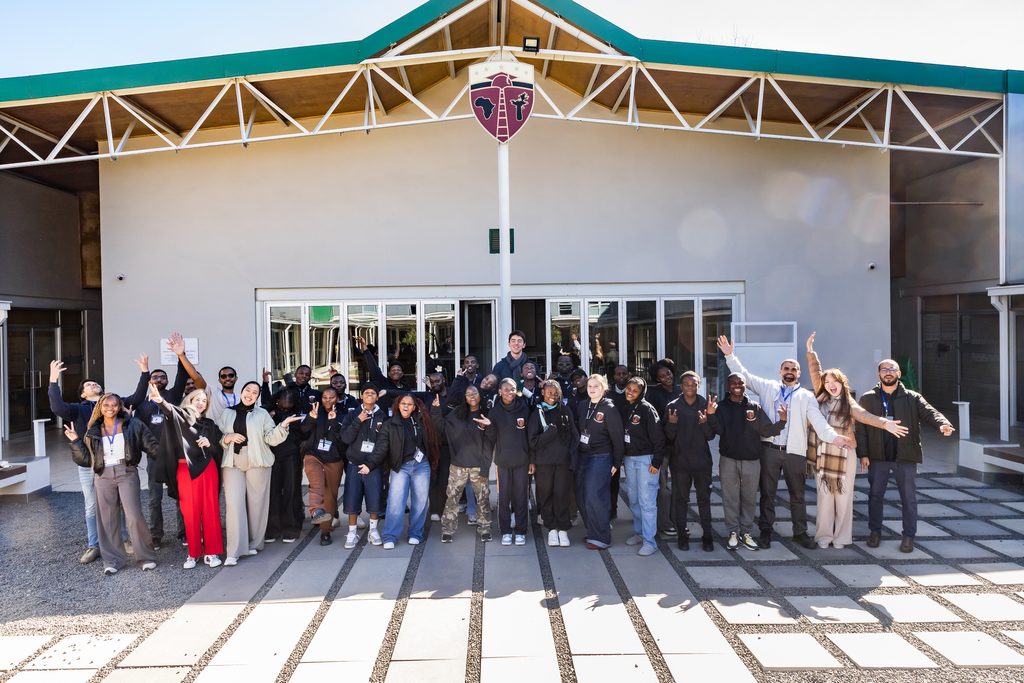
Mohamed bin Zayed University of Artificial Intelligence (MBZUAI), one of the world’s leading AI research institutions, and African Leadership Academy (ALA) partnered to launch the first edition of the AI for Africa bootcamp.
The intensive two-week residential program brought together talented high school students from across the continent for a hands-on introduction to artificial intelligence.
The program combined ALA’s deep expertise in leadership development with MBZUAI’s academic strength in AI, giving students the opportunity to learn foundational AI concepts, work alongside graduate student mentors, and engage directly with leading researchers and faculty. Together, ALA and MBZUAI set out to equip the next generation of African innovators with the skills, confidence, and vision to help shape the future of technology on the continent and beyond.
Over the course of the two weeks, students moved from coding fundamentals and version control to AI tools, machine learning theory, AI safety, and ultimately, project development and deployment.
The program also featured a keynote series from researchers using AI to address some of the continent’s most pressing challenges. Dr. Rendani Mbuvha spoke about localizing AI-powered weather forecasts for Africa, drawing on the AfriClimate AI initiative and the Rain Check platform. Professor Vukosi Marivate, from the University of Pretoria and AfriDSAI, explored natural language processing as an adaptive challenge and highlighted the data gaps facing many of Africa’s underrepresented languages. Dr. Catherine Nakalembe closed the series with a talk on translational GeoAI, reflecting on her work bringing technology to communities where it can have the greatest impact and reminding students that where they come from does not define how far they can go.
Learning extended beyond the classroom. Students visited the Council for Scientific and Industrial Research (CSIR) in Pretoria, where they were introduced to applied AI research projects and had the opportunity to engage directly with researchers through an extended question-and-answer session. The program also made space for games, team activities, and a safari excursion, giving students opportunities to build relationships alongside the rigorous academic experience.
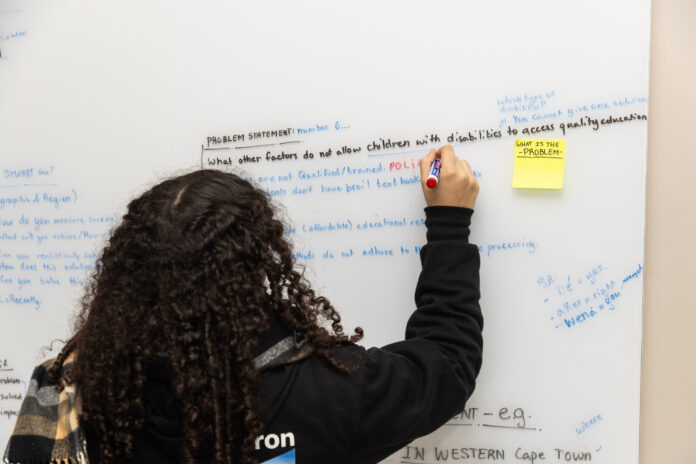
The two weeks culminated in a capstone showcase, where students presented AI-powered solutions designed to address challenges they see in their own communities.
- Maarifa Learn is an AI-powered learning platform designed to give students and communities access to practical knowledge, guided support, and learning tools in one place.
- AgroFast is an AI agriculture platform that supports disease detection, farm management, soil planning, and budget tracking.
- i/mpact is a personal sustainability app that measures users’ environmental footprints and suggests practical ways to reduce them.
- Lima is a mobile app that predicts rainfall and recommends irrigation schedules to help farmers conserve water and avoid over-irrigation.
- Farm Connect is an AI-powered marketplace that connects farmers directly with buyers while also supporting cooling, logistics, and secure payments.
Each project reflected what the program was designed to encourage: students using emerging technology not simply for the sake of innovation, but to solve real problems in the communities and contexts they know best.
We are grateful to MBZUAI and to every mentor, speaker, researcher, and organizer who made the first edition of AI for Africa possible. Most of all, we are excited by what these young innovators will build next.
The future of AI in Africa is in good hands.