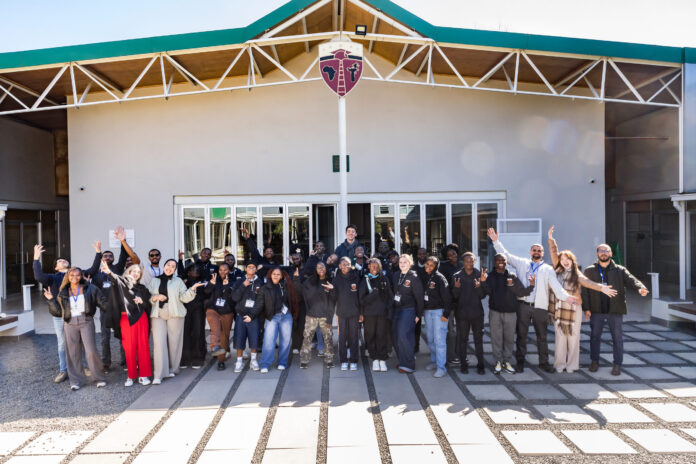
The sixth edition of the Chevron Engineering Leadership Program took place on the African Leadership Academy (ALA) campus from June 22 to July 10, 2026.
This year, 31 high school students from seven African countries came together with engineering student mentors from universities across Gauteng, South Africa, to explore one central question: How can technology be used to improve education across Africa?
The program is part of an ongoing partnership between Chevron and African Leadership Academy. Combining a residential experience with project-based learning, the program challenges students to apply human-centered design and engineering principles to real problems facing communities across the continent.
Throughout the program, students worked in teams to identify challenges, understand the people affected by them, design potential solutions, and build working prototypes. Mentors emphasized a human-centered approach to engineering, encouraging students to think beyond technology for technology’s sake and instead focus on creating solutions that are useful, accessible, and grounded in real needs.
By the end of the program, the students had developed seven engineering solutions addressing challenges in education across Africa. Among them were:
- The Insighter was designed to support visually impaired secondary school students in Lilongwe, Malawi. The solution uses a pair of smart glasses connected to a tablet to convert written classroom content into audio, helping students participate more independently in lessons. The project demonstrated how thoughtful engineering can make education more inclusive and accessible.
- Tympo STEM Kits was developed for rural schools in Kumasi, Ghana. The project transforms locally sourced electronic waste into affordable, modular science kits that make hands-on STEM learning more accessible. Through a cross-subsidy model, the concept aims to support public schools while promoting sustainability, innovation, and practical science education.
- Portable Learning Blocks, the winning project, was designed for young learners in Nairobi, Kenya. The team reimagined early childhood learning through interactive LCD blocks that teach foundational literacy and numeracy skills without requiring internet access. Portable and hands-on, the solution was designed to make learning more engaging and accessible, even in environments with limited connectivity.
While the prototypes were an important part of the experience, the program was about much more than the solutions students built. Participants left with greater confidence in their ability to tackle complex problems, collaborate across cultures, and use engineering as a tool for meaningful change.
They also built friendships and networks with peers and mentors from across the continent, reinforcing one of the program’s most important lessons: some of the strongest solutions emerge when young people with different perspectives come together around a shared challenge.
We are grateful to Chevron for its continued partnership and investment in the next generation of African engineers, innovators, and problem-solvers. Together, we are helping young people develop not only the technical skills to build new solutions, but also the leadership and empathy to build solutions that matter.